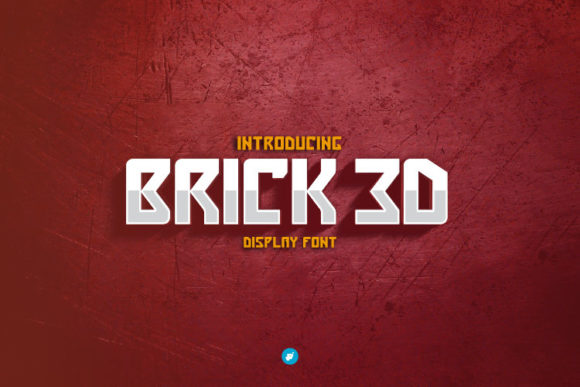
Brick 3D: A Bold and Casual Display Font for Powerful Design Statements
In the world of graphic design, typography plays a crucial role in shaping the visual identity of a brand or project. Choosing the right font can make all the difference between a generic design and one that stands out. Brick 3D is a bold and casual display font that brings a strong personality to your designs, offering a unique blend of modernity and retro charm.
Brick 3D is designed with a three-dimensional effect that gives it depth and dimension, making it visually striking. This font is particularly well-suited for logos, posters, flyers, and other marketing materials where a bold and attention-grabbing style is needed. Its casual yet confident appearance makes it versatile enough to work across a variety of industries and design purposes.
One of the key challenges designers face is finding a font that balances uniqueness with readability. Many display fonts are either too ornate or too rigid, which can limit their practical use. Brick 3D addresses this by combining boldness with clarity. Its thick strokes and rounded edges create a sense of approachability while still maintaining a strong visual presence. This makes it ideal for applications where you want to capture attention without overwhelming the viewer.
Whether you're designing a logo for a startup, creating a promotional poster for an event, or developing a flyer for a local business, Brick 3D can help elevate your design. Its versatility allows it to adapt to different contexts, from digital media to print materials. The font’s 3D effect adds a layer of sophistication that can enhance the overall aesthetic of your project without compromising legibility.
Another important consideration when selecting a font is its compatibility with various design platforms. Brick 3D is available in multiple formats, including web-safe and downloadable versions, ensuring that it can be used across different software and devices. This accessibility is especially valuable for designers who work across multiple mediums or collaborate with others who may not have the same tools.
Let’s explore some practical applications of Brick 3D in real-world scenarios. For instance, a small business looking to launch a new product line might use this font on their packaging and advertising materials. The bold and casual nature of Brick 3D helps convey confidence and approachability, which can resonate well with target audiences. Similarly, a music festival could use Brick 3D in their promotional posters to create a dynamic and eye-catching visual impact.
Designers working on digital projects can also benefit from Brick 3D. Its 3D effect translates well to screens, making it suitable for website headers, social media graphics, and video content. However, it’s important to consider the context in which the font will be used. While Brick 3D excels in high-impact situations, it may not be the best choice for long-form text or body copy due to its bold and stylized nature.
For those looking to implement Brick 3D, there are a few considerations to keep in mind. First, ensure that the font is properly licensed for the intended use. Many design platforms offer free and paid versions of Brick 3D, so it’s essential to review the terms of use before incorporating it into your projects. Second, test the font across different backgrounds and sizes to ensure it remains readable and visually appealing in all contexts.
Additionally, pairing Brick 3D with complementary fonts can help balance the design. For example, using a clean sans-serif font for body text alongside Brick 3D for headings can create a cohesive and professional look. This approach not only enhances readability but also allows the boldness of Brick 3D to shine without overpowering the rest of the design.
Ultimately, Brick 3D offers a powerful solution for designers seeking a font that combines strength with style. Whether you're aiming to create a memorable logo, craft an engaging poster, or develop a striking flyer, this font has the potential to transform your design. By understanding its strengths and limitations, you can make informed decisions that align with your creative goals and audience needs.